PepMute™ siRNA Transfection Reagent
Description:
PepMute™
siRNA Transfection Reagent, formulated from simulation of virus cell penetrating
peptides (CPPs), is a total novel
siRNA
delivery tool which provides more than 95% silencing efficiency at 1 nM siRNA in
variety of mammalian cells.
With our proprietary peptide simulation technology (PST),
hundreds of viral CPPs were simulated, synthesized and screened for gene delivery efficacy in variety
of mammalian cells (Figure 1). PepMute™
reagent was then identified and validated as an exceptionally efficient vector
for condensing and transfecting short (under 100 bp) single or double stranded
nucleic acids such as siRNA, miRNA mimics and DNA oligoes to wide spectrum of mammalian cells.
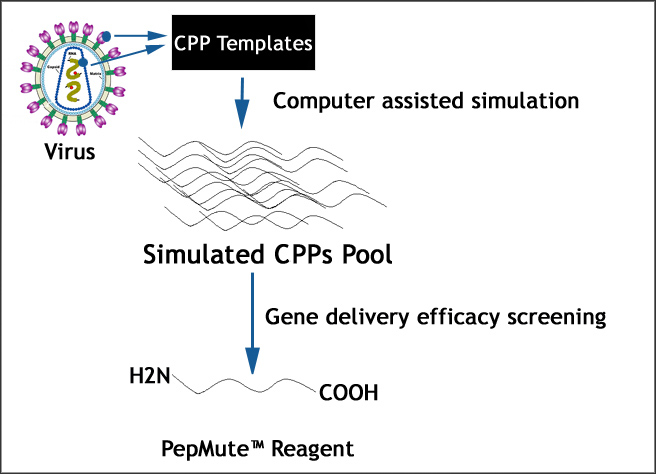
Figure 1. A cartoon showing PepMute™
siRNA Transfection Reagent was
developed by PST
Size:
-
PepMute™ Reagent,
1.0 mL, sufficient for ~1,333 reactions based on transfecting 0.5~5.0 pmol
siRNA or miRNA mimics in 24-well plate
- PepMute™ Transfection
Buffer (5x ),
formulated for maximal
transfection efficiency, 8.0 mL at 5x concentrated stock solution to make 40 mL
of working solution
Applications:
- siRNA miRNA mimics or mRNA transfection
- DNA/siRNA co-transfection
- DNA oligoes transfection
Storage:
Store at 4 °C for PepMute™
Reagent and RT for PepMute™ Transfection Buffer (5x ). If stored properly, the product is stable for 12 months or
longer.
Advantages:
- Excellent silencing at final 1.0 nM siRNA
- Over 95% gene silencing in a wide variety of cells
- One tube reaction with easy standard protocol
- Compatible with serum and antibiotics
- Protocols adapted to HTS
- Very low cytotoxicity
- Very affordable
Silencing Efficacy Comparison between PepMute™ siRNA Transfection Reagent
and Leading Products
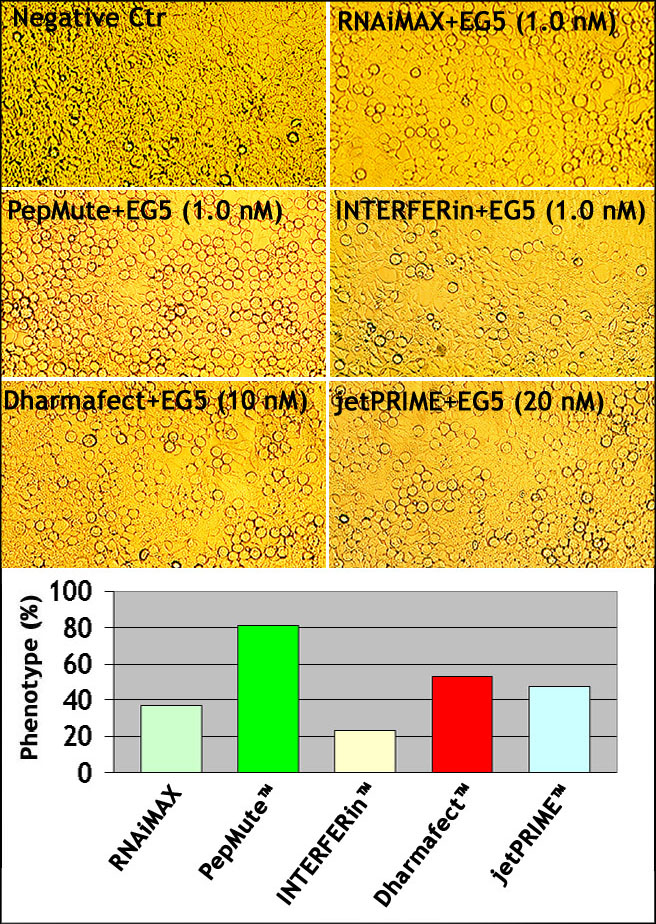
Figure 2.
Excellent silencing of endogenously expressed KIF11 (also known as EG5) in
HEK293 cells with 1.0 µl of PepMute™
reagent and 0.5 pmol EG5 siRNA per well of 24-well plate.
KIF11
(also known as EG5) encodes
a motor protein that belongs to the
kinesin-like protein family involved in chromosome
positioning and bipolar spindle formation during cell mitosis. A reduction in
KIF11 levels causes mitotic arrest. PepMute™ reagent effectively delivers EG5 siRNA (final 1.0 nM)
to HEK293 cells, leading to more than 80% of "round-up" phenotype of HEK293
cells 48h post transfection over negative control (final 1.0 nM with sham EG5 siRNA)
while leading siRNA transfectin reagents, Lipofectamine™ RNAiMAX
(RNAiMAX, 1.0 nM EG5 siRNA) / INTERFERin (1.0 nM EG5 siRNA) / Dharmafect (10.0 nM EG5 siRNA) and jetPRIME
(20 nM EG5 siRNA) give average 37%, 23%, 53% and 48% ball-shaped phenotype
respectively on HEK293 cells. The phenotype of "rounded-up" 293 cells
were visualized (upper panel) and quantified (lower panel) 48h post transfection with a Nikon
microscope.
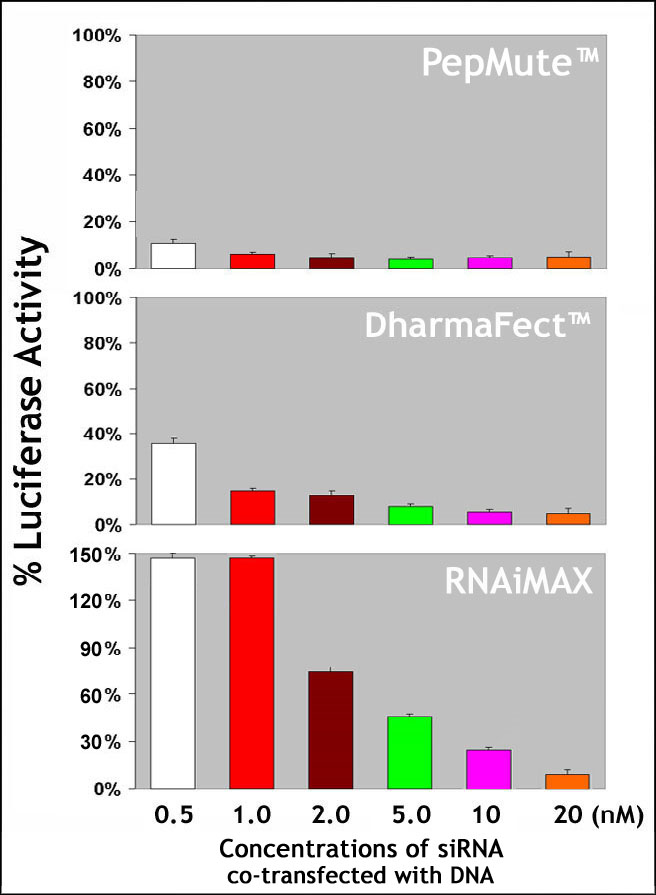
Figure 3. Silencing efficiency comparison of PepMute™ Transfection Reagent
(upper panel) with Dharmafect 4 (middle panel) and Lipofectamine™
RNAiMAX (RNAiMAX, lower panel) siRNA
Transfection Reagents on A549 cells. siRNA targeting renilla luciferase
at different final concentrations ranging from 0.5 to 20 nM was co-transfected with renilla luciferase
gene (0.5 µg of pRL-CMV DNA per well) by the above three transfection reagents
per manufacturers' protocols into A549 cells growing on a 24-well plate.
Renilla luciferase activity was determined 36h after
post co-transfection with renilla luciferase determination system (Promega). The
luminescence was measured from 5.0 µl of lysate during 10s integration with a
luminometer (Beckman Coulter LD 400). Luciferase activity was
expressed as light units integrated over 10s (RLU) and normalized per mg of cell
protein by using the BCA assay. The errors bars represent standard deviation
derived from triplicate experiments. Luciferase-silencing efficiency was
calculated relative to untreated cells. While
PepMute™ and Dharmafect™ 4 reagents delivered
significant gene silencing from 1.0 nM of renilla luciferase siRNA,
Lipofectamine™ RNAiMAX gave good knockdown only after
20 nM while enhanced gene
expression at low concentration of siRNA (0.5 and 1.0 nM respectively) was
observed.
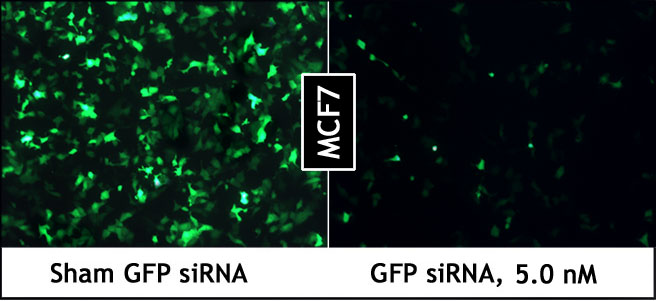
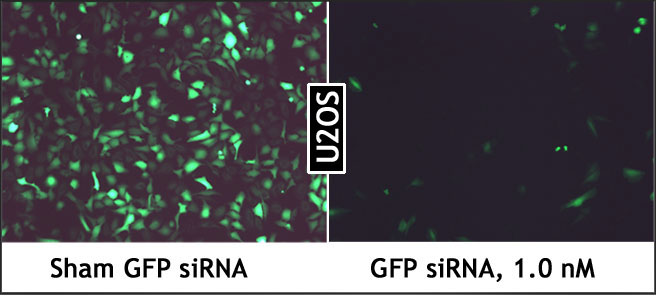
Figure 4. PepMute™ Transfection Reagent knocked down stable GFP expression
in MCF7 cell (upper panel) and U2OS cell (lower panel) by reversely transfecting
5.0 and 1.0 nM GFP siRNA respectively.
Green fluorescence protein (GFP) was stably expressed in MCF7 and U2OS
cells. siRNA targeting
GFP gene (right panel) and a sham siRNA (left panel) were introduced into MCF7
and U2OS cells with final 5.0 and 1.0 nM respectively
by
reverse transfection with PepMute™ Transfection Reagent. GFP gene silencing was monitored
48h post transfection by
a Nikon fluorescence microscope. Quantitative analysis showed that
GFP siRNA at 5.0 and 1.0 nM delivered
by PepMute™ siRNA Transfection Reagent knocked down 90% and 95% stably expressed GFP in
MCF7 and U2OS cells respectively.
Data Sheet & Protocol
-
A Standard siRNA Transfection Protocol

-
A Standard siRNA/DNA
Co-transfection Protocol
-
A Reverse siRNA Transfection Protocol for HTS
To request a free trial sample, please
Create An Account with us to enter your shipping address and email
us at
order@signagen.com

Testimonials:
I had tried your product pepMute transfection
reagent on primary retinal neurons and was satisfied with the transfection
efficiency. Will order!
- Vijai Krishnan Ph.D,
Louisiana State University
I really appreciate you sending me a sample of PepMute siRNA reagent. I tested
DNA/siRNA co-transfection using 293T cells and the results were completely
satisfactory. I was able to get 95% knockdown of my target gene at 1.0 nM
siRNA as well as expression of plasmid DNA using the recommended protocol. I
will have to test and see if other cell lines are also as effective. I
will definitely think about moving to use this reagent over Dharmafect or
Oligofectamine.
- HARISH N. RAMANATHAN Ph.D., NIDDK, NIH
I tried PepMute reagent and I like it. It has so high efficiency and no
cytotoxicity. I am going to use it. Thank for introducing it to our lab.
- Radmila Hrdlickova, Ph.D., UT Austin
Tried 3 different siRNAs with 100% silencing on A2780 cell. That is
amazing! I already placed an order.
- Doris Benbrook, Ph.D., OUHSC
Yes, I certainly did use that sample of PepMute you generously sent us… and it
worked so well on HepG2 cells that I have since ordered a full size and am using
it exclusively for siRNA! I compared to RNAiMAX and Roche’s X-tremeGENE
products, but these products were not as effective as PepMute. Thanks
again for the sample. It was fantastic!
- Matthew Jackson, Ph.D., USDA